Table of Contents
ToggleUnderstanding the components of the solar system is important for you to make informed decisions.
Knowing the quality and function of each part, from the solar panel to the accessories, also helps you select a reliable, high-performing, and long-lasting system that delivers the power value you want.
In this post, you will know the components needed for a solar power system and the benefits of a well-placed solar system.
Key takeaways
- A solar power system uses several components, which are panels, inverters, batteries, and wiring, which all work together to convert sunlight into usable electricity for your home or business.
- The type of solar system you choose (on-grid, off-grid, or hybrid) determines which components you will need and how much the full setup will cost.
- Each component has different types and price points, so understanding what each one does helps you pick the best option for your budget and energy needs.
- A well-integrated solar system with quality components will produce more energy, last longer, and save you more money on electricity bills over time.
What is a solar power system?
A solar power system is a setup that captures sunlight and converts it into electricity using solar panels, inverters, batteries, and other accessory devices.
There are 3 main types of solar systems: on-grid, off-grid, and hybrid systems. Your choice of solar system will determine the components of solar power you will need.
Off-grid systems rely heavily on solar energy system components like batteries for storage, while On-grid systems can operate without storage by feeding excess energy into the electricity grid, and hybrid systems combine both systems.
Components of Solar Power System
The components of a solar power system are solar panels, solar inverters, solar batteries, a charger controller, mounting accessories, monitoring systems, wires, and other connection accessories.
Solar panels
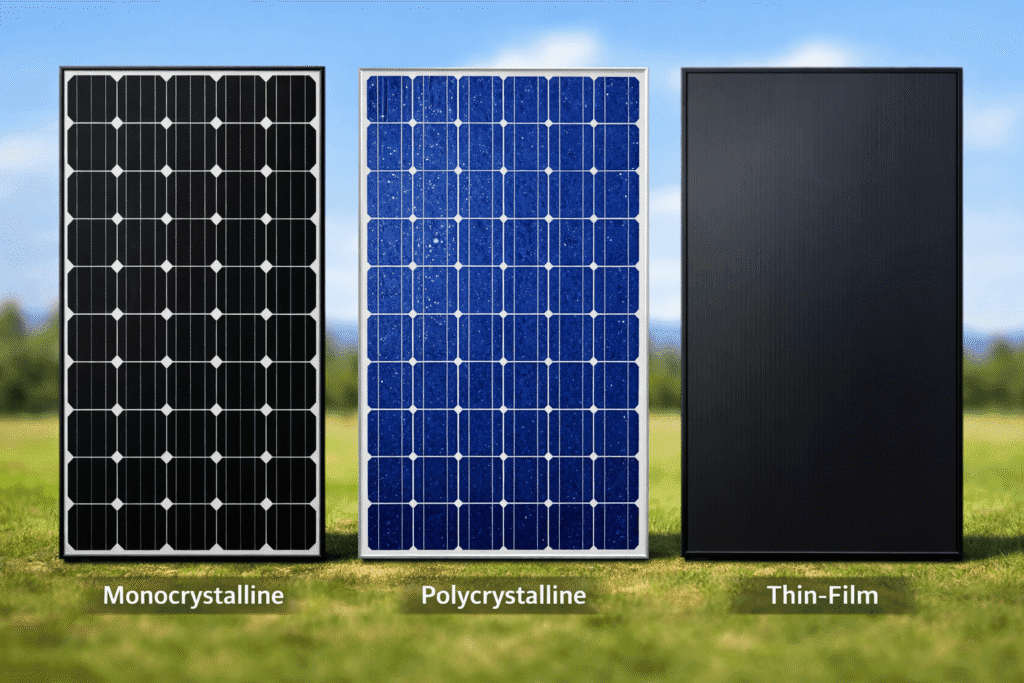
Solar panel is the first and most recognizable components of a solar system, which capture sunlight and convert it into electricity. They are made of solar cells and are classified into;
- Monocrystalline: It is highly efficient and produces more power per square meter, with a longer lifespan, but is more expensive.
- Polycrystalline: They are the most affordable and practical for residential uses, with slightly lower cost, blue-colored panels.
- Thin-film: They are lightweight and flexible, making them ideal for large commercial installations, and are often cheaper.
Solar inverters
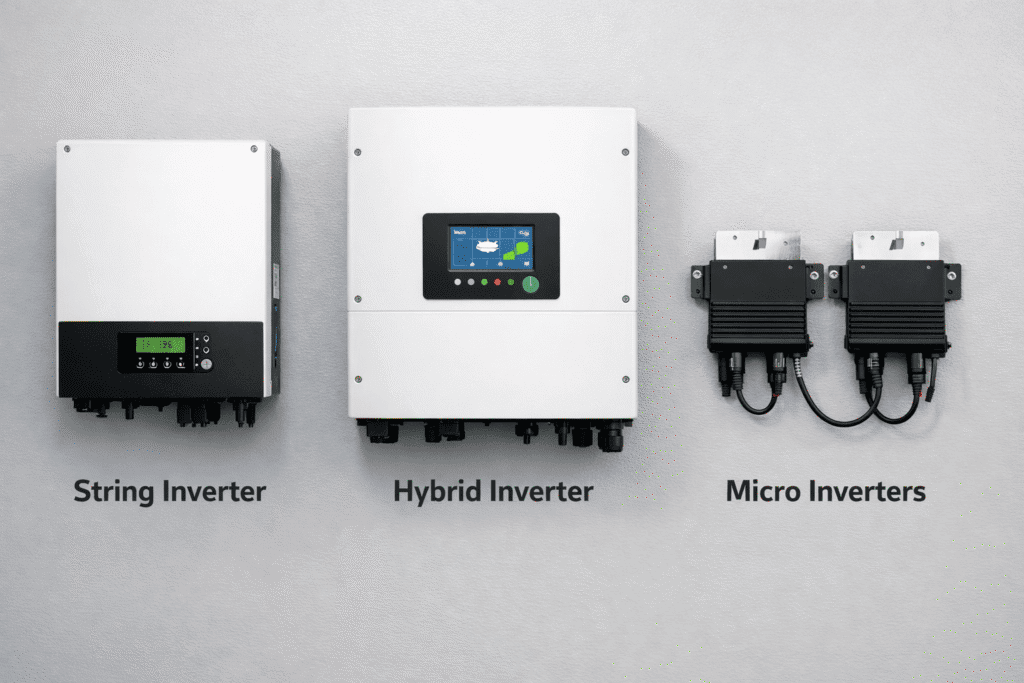
Solar inverters are essential components for solar power that convert direct current (DC) produced by the solar panels into alternating current (AC) that powers your household. The main types of inverters include:
- String inverter: They are budget-friendly and suitable for small to medium setups.
- Micro inverter: Installed on each solar panel to improve performance in shaded areas for higher energy harvest.
- Hybrid inverter: Hybrid manages energy from solar panels, batteries, and the grid electricity.
Understanding which inverter suits your setup helps you make the right decision within your budget.
Solar Batteries:
Solar batteries store excess energy generated by solar panels for use during nighttime, cloudy days, or during periods without sunlight.
It is important in off-grid and hybrid solar setups. The popular battery types include;
- Lithium-ion batteries: It has high energy density, a Long lifespan, high efficiency, and it is ideal for homes and businesses.
- Lead acid: it is less efficient, affordable, but has a shorter lifespan, and it is suitable for small setups.
- Flow batteries: They are expensive, scalable, and durable, mainly for large-scale system storage for commercial systems.
Solar Charge Controller:
A solar charge controller regulates the energy coming from the solar panels to the batteries, preventing overcharging and reverse current flow, which can damage batteries and reduce efficiency. You need to know there are two types, which are;
- Pulse width modulation (PWM): This controller is suitable for smaller systems due to its affordability.
- Maximum power point tracking (MPPT): This controller is more efficient for larger systems with higher voltage panels.
Adding a charge controller to your solar components list helps your battery last longer. And your solar system operates well.
Mounting and Racking Systems:
Mounting and racking systems are solar components that hold solar panels securely on rooftops, poles, or open land. They include;
- Roof-mounted systems: Solar panels are installed on the rooftop to save space common for homes.
- Ground-mounted systems: Solar panels are installed on the ground, and it is ideal for large open spaces or for businesses with unlimited space.
Monitoring Systems:
Monitoring systems help you track energy production, usage, and solar power system health in real-time.
They can function with or without an inverter to help you detect faults early and also ensure each part works together effectively.
Wires and Other Electrical Components:
Wires, fuses, circuit breakers, connectors, junction boxes, and conduits are all important components needed for the solar system, and they ensure a smooth flow of electricity between the panels, inverter, batteries, and your household appliances.
They might look small, but they are essential because high-quality accessories help prevent overheating and power loss.
Benefits of a Well-Integrated Solar System
A well-integrated solar system with quality solar components will make all solar power components work effortlessly, increasing energy production for your household appliances, and ensuring your solar power system lasts for decades with minimal issues.
- Maximum Energy Output: When every component in your solar power system is properly matched and integrated, there is little to no energy loss between generation and consumption.
You get maximum value for your system and money. - Reliable Power for Your Home: A well-integrated system delivers consistent power to your household appliances without the voltage fluctuations or sudden outages that poorly assembled systems are prone to.
Constant and dependable electricity for your usage. - Longer System Lifespan: Quality components that are designed to work together experience far less wear and strain over time. This compatibility reduces the risk of overheating, overcharging, and premature failure.
Allowing you to enjoy the value for your money for over 20 years. - Lower Maintenance Costs: When your solar components communicate and operate in harmony, faults are easier to detect early and less likely to escalate into costly repairs. You spend less money on replacements, making your overall investment more cost-effective in the long run.
- Better Return on Investment: With a well-integrated solar setup, you recover your installation costs sooner and enjoy years of virtually free electricity, maximizing the financial benefit of going solar.
Frequently Asked Questions
The most important parts are solar panels, an inverter, a battery, a charge controller, wiring, and connectors, but every device in the solar component list has a role to play in the solar power system.
The components of the solar systems are;
- Solar panels
- Solar inverters
- Solar batteries
- Solar charge controller
- Mounting and Racking System
- Monitoring system
- Wire and other electrical components
Yes, systems connected to the grid can operate without batteries, although off-grid setups require batteries to store energy.
Solar systems are made of solar panels, inverters, batteries, mounting systems, monitoring systems, and wiring, which collectively form the components of a solar power system.
Conclusion
Now that you have learned about the solar system components, you understand how each part works together to power your appliances and the benefit of selecting high-quality devices.
The next step is to understand the cost of various solar systems to know which works better for your electrical needs.
Read the article on the cost of solar systems for that.
