
Table of Contents
ToggleThe first question that comes to mind when considering installing a solar power system for your home or business is, What is the cost of solar power in Nigeria?
To answer your question, the cost of solar power in Nigeria ranges from ₦1,000,000 to ₦8,000,000 for most homes, and ₦3,000,000 to ₦20,000,000 for most businesses.
In this article, I will break down the various components of the cost of a solar power system and provide tips to reduce the cost of your solar power system, and give you the factors that affect the cost of solar power in Nigeria.
Key Takeaways
- The cost of solar power in Nigeria ranges from ₦1,000,000 to ₦20,000,000.
- Home solar power cost in Nigeria ranges from ₦1,000,000 to ₦8,000,000.
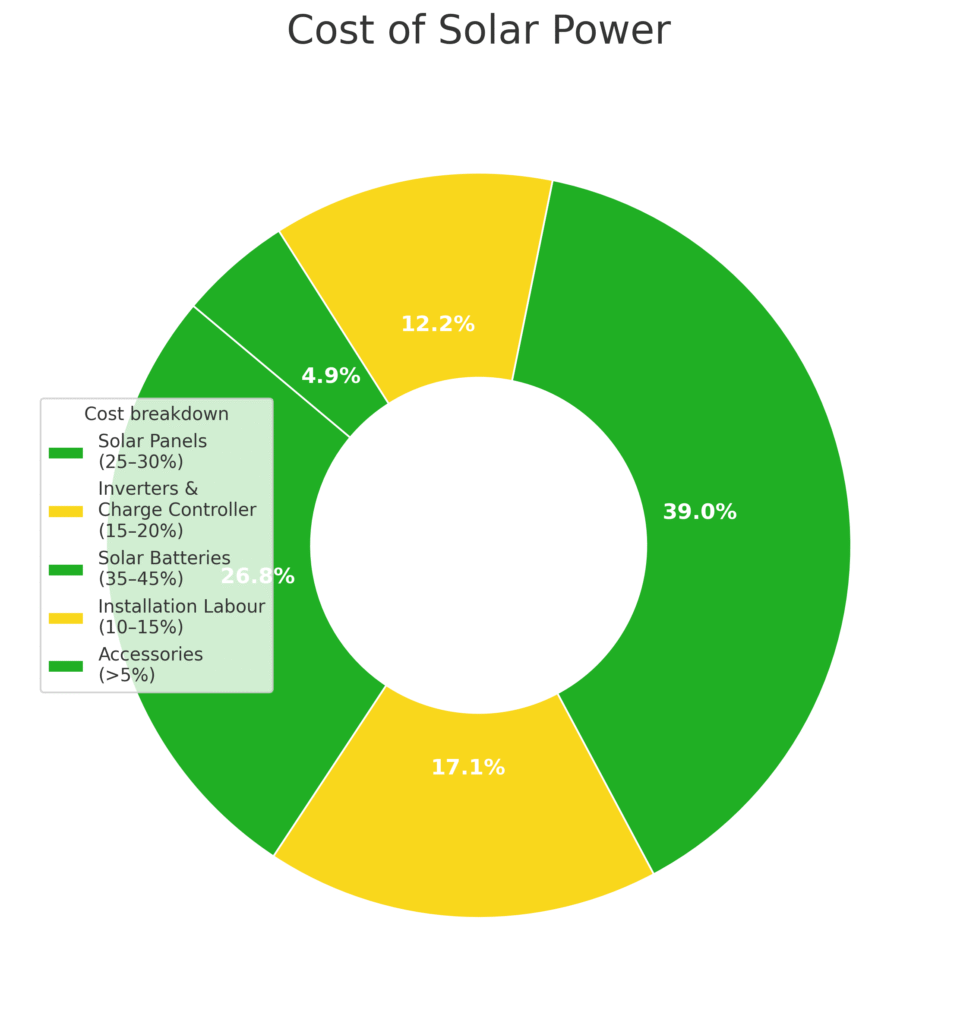
- The components that make up the cost of a solar system in Nigeria are solar panels (25% to 30%), solar inverters & charger controllers (15% to 20%), solar batteries (35% to 45%), solar installation labour (10% to 15%), and solar installation accessories (<5%).
- The factors affecting the cost of solar power are the location of the solar installation, current exchange rate, brand & quality of solar components, installation roof or ground, and solar system size.
How much is the cost of solar power in Nigeria?
The most common cost of solar power in Nigeria ranges from as low as ₦1,000,000 for a small solar power system to ₦20,000,000 and beyond for large solar power systems.
Solar power cost primarily depends on the size of the solar system to be installed, the quality of components to be used, and the solar installation cost.
What is the Home solar power cost in Nigeria?
Home solar power cost in Nigeria ranges from ₦1,000,000 to ₦8,000,000. Residential homes usually need electrical power ranging from 3.5kVA to 10kVA. This makes most homes need cheaper solar power systems.
What are the estimated Costs by Solar Power System Size?
System Size | Estimated cost (₦) | Suitable for |
1KVA | ₦1,000,000 – ₦1,200,000 | Basic needs like lights, fans, phone charging, laptop charging, and a TV. |
2.5KVA | ₦2,000,000 – ₦2,000,000 | Can power all basic needs, multiple fans, and more. |
3.5KVA | ₦3,000,000 – ₦4,000,000 | Can power fridges, TVs, lights, fans, a small electric kettle, and a small pressing iron. |
5KVA | ₦4,000,000 – ₦8,000,000 | It can power a full household’s electrical needs. Even an inverter AC, a water pumping machine, and a Deep freezer |
10KVA | ₦9,000,000 – ₦13,000,000 | Ideal for large homes, offices, and light commercial use, including multiple AC units. |
20KVA | ₦17,000,000 – ₦25,000,000 | This serves industrial power needs |
We will tell you how much your intended solar system would cost for free.
Cost breakdown of key components of a solar power system.
The components of a solar system, as well as their individual quality and solar installation cost, are the primary cost drivers. They determine if the primary would be higher or not.
Solar Panels
Solar panels usually cost 25% to 30% of the entire cost of a solar power system.
Their exact cost for any solar power project depends on the number of solar panels to be used, the wattage of each solar panel, and the type of solar panels (mono or polycrystalline) to be used.
The price for a 600W solar panel ranges from ₦115,000 to ₦180,000.
Solar inverter and charge controller
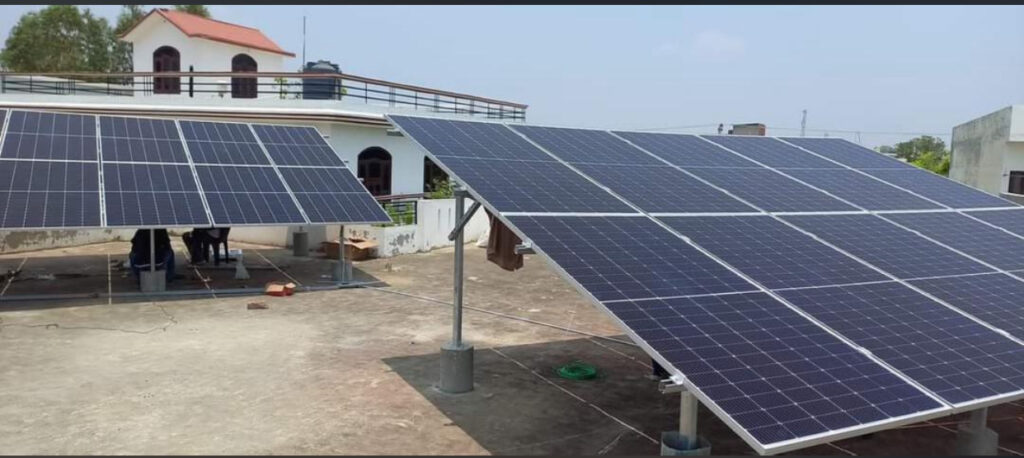
Solar Inverters and charge controllers usually account for 15% to 20% of the total cost of solar power in Nigeria, and the entire solar system determines the exact type of inverter and charge controller to be used in the solar system.
Solar inverters are rated in kVA and volts, and they come in 2 types: hybrid and pure sine. The higher the rating, the more expensive. A 5.5KVA 48volts inverter ranges from ₦650,000 to ₦720,000.
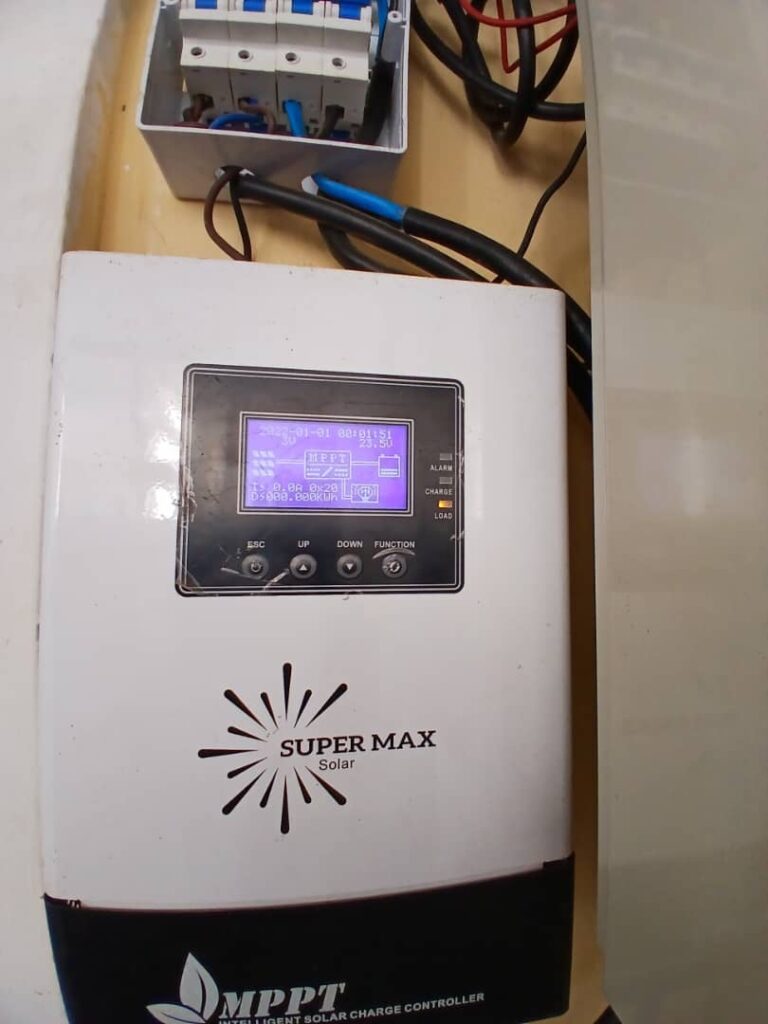
Solar Charge controllers are rated in amperes. A 60A MPPT charge controller price ranges from ₦145,000 to ₦155,000.
Solar batteries
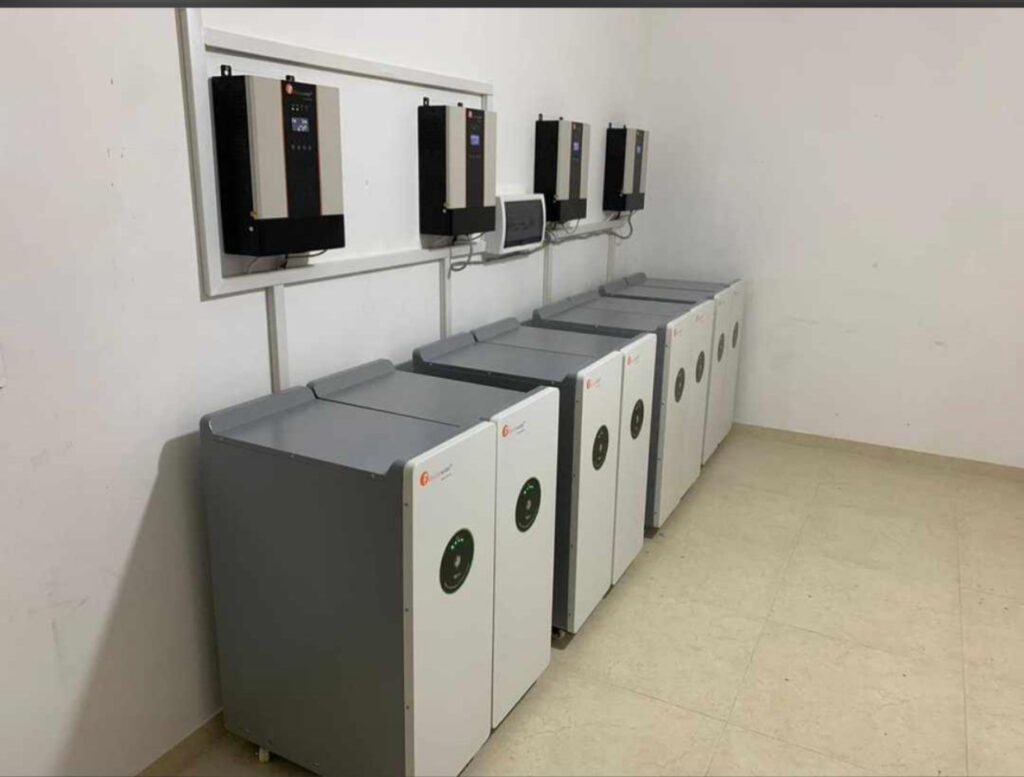
Solar batteries are the single largest contributors to the cost of most solar systems in Nigeria. They account for 35% to 45% of the entire solar system cost.
There are 2 types of solar batteries in Nigeria. Lead-acid battery, which is cheap but lasts for just 3 to 5 years, compared to Lithium batteries, which are more expensive initially but can serve for as long as 8 to 12 years.
A 200AH lithium battery can cost as much as ₦800,000 to ₦1,400,000. Read Earthbond | Nigeria+1 for more details on the prices.
Solar Installation Labour
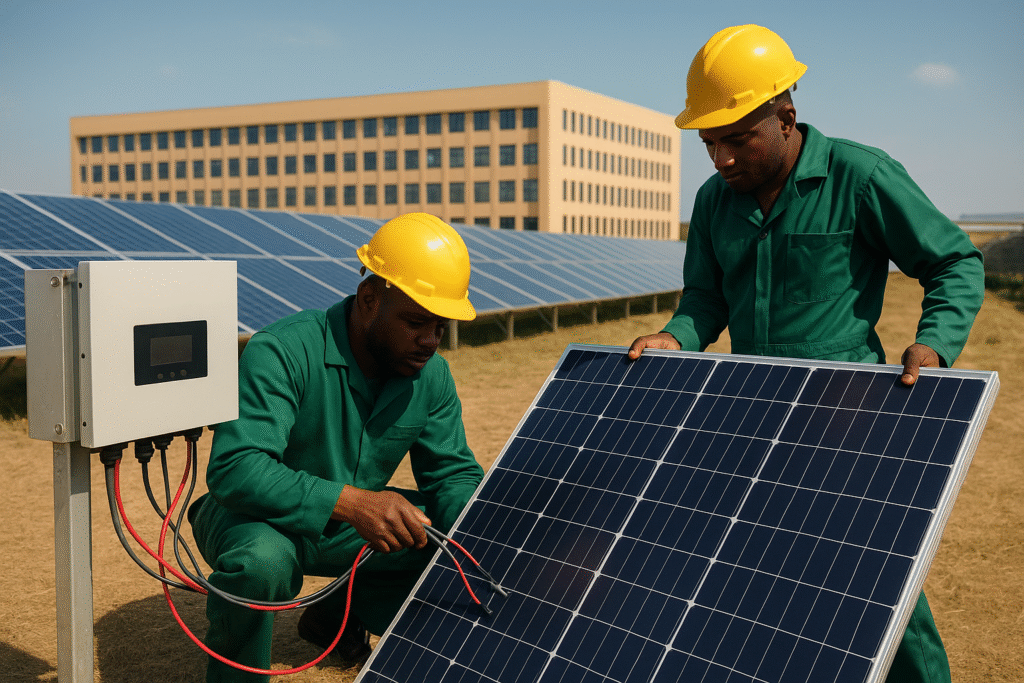
This happens to be one of the lowest contributors to the cost of solar power in Nigeria. It ranges from 10% to 15% of the total solar power cost, and it covers the cost for:
- Wiring
- Mounting
- Scaffolding
- Permits
- Transportation
- Installer profits
- After installation support
The installation cost of a 3.5KVA solar power system should be about ₦300,000.
Solar installation accessories
This is the lowest contributor to the total solar power cost. It accounts for less than 5%, and sometimes it can be seen as insignificant as 1%. It covers the costs of:
- Wires
- Mounting rails
- Battery and Inverter stand
What are the factors that affect the final cost of solar power in Nigeria?
- Location: The cost of solar power in Nigeria is always higher in rural areas without good, accessible roads or in distant locations. The transportation to these installation locations is higher, hence increasing the overall cost of solar power in those locations.
- Solar system size: The size of a solar system always affects the cost of solar power in Nigeria. The larger the solar system, the more expensive the components needed to make up the system, increasing the overall cost.
- Installation roof or ground: Solar installation on complex roofs needs more labor, increasing the cost of labor as well as the cost of the entire solar system.
- Solar components quality and brand: Higher-quality or premium brand solar components for solar systems are usually more expensive at the time of installation of the solar system.
Using them in your solar system installation increases the cost of the solar system.
Low-quality or cheaper solar systems are cheaper at installation but increase maintenance and replacement costs down the line.
- Exchange rate: Most of the components used in solar installations in Nigeria are imported. Hence, whenever the exchange rate goes up, the cost of solar power in Nigeria increases.
How to calculate the exact cost for a solar power system for a home (step-by-step)
To know the exact cost for a solar power system for your home or business, you would need to consult a real solar company or an experienced technician.
We at Solarlify can give you this exact cost; just give us a call or fill out our booking form.
You can also get a rough estimate by using our solar calculator.
How to reduce the cost of solar power in Nigeria. (practical tips)
- Use energy-efficient electrical appliances: One of the ways to reduce the cost of solar power in Nigeria is to use appliances that don’t consume as much electrical energy as others. For example, using an inverter AC instead of a normal AC. Using LED lights instead of yellow bulbs.
- Start small and scale (add battery later): One of the ways to reduce the cost of your initial installation of a solar power system is to reduce the initial batteries included in your setup. As you begin to get the ROI of “free electricity,” you can add more batteries and panels.
Note: Always use a hybrid inverter for your initial solar power system setup. This makes it easy for you to expand.
- Use quality Solar power system components: Always use quality batteries, an inverter, and solar panels. This lowers your future cost of maintenance as well as replacements.
- Bulk quotes & negotiate installation warranty: Always get quotes from different solar companies or solar installers, compare their prices, offers, and warranty. Then, proceed to employ the services of the installer with the best offering.
Frequently Asked Questions
A 2.5 kVA solar system (with a matching inverter and adequate batteries) can typically power:
- TV (1 unit)
- Energy-efficient fridge
- LED bulbs (10–15 units)
- Fans (2–3 units)
- Laptop + phone charging
- Decoders / WiFi router
It cannot power: an electric cooker, AC (unless it’s a 0.8 HP inverter AC and your batteries are strong), a microwave, an iron, or a pumping machine.
Actual performance depends on:
- Battery size (Ah)
- Solar panel array (kW)
- Daily sunlight
- Energy habits in the home
The cost depends on the load, but most 3-bedroom homes in Nigeria require 2 kW – 5 kW of panels.
Typical price ranges (2025 market):
- 2 kW of panels: ₦900,000 – ₦1,400,000
- 3 kW of panels: ₦1,300,000 – ₦2,000,000
- 5 kW of panels: ₦2,200,000 – ₦3,000,000
A full solar setup for a 3-bedroom home (inverter + batteries + panels) usually costs: ₦3.5m – ₦9m, depending on battery type (Lithium vs Tubular).
Most Nigerian households need 8–20 panels, depending on:
- Energy usage (kWh/day)
- Panel wattage (e.g., 400W, 500W, 550W)
- Sunlight hours (average 4–6 hrs/day)
- Whether you want a full or partial backup
Typical rule of thumb:
Home Type | System Size | Approximate solar panels (550W each) |
1 – 2 bedroom | 1.5 – 3 KW | 3 – 6 panels |
3 bedroom | 3 – 5 KW | 6 – 10 panels |
Larger homes | 5 – 10+ KW | 10 – 20 panels |
As of 2025, a 600W monocrystalline panel costs:
₦120,000 – ₦180,000 depending on brand and supplier.
- Premium brands (Longi, JA Solar, Jinko): ₦150,000 – ₦180,000
- Mid-range brands: ₦120,000 – ₦145,000
Prices change with FX rates and availability, but anything far cheaper is often fake or extremely low quality.
Conclusion
The true cost of solar power in Nigeria depends on your energy usage, backup hours, and the quality of components you choose. By auditing your load, sizing your panels correctly, and choosing durable lithium batteries, you get a system that lasts 8–15 years with minimal maintenance.
Solar is no longer a luxury. It’s a long-term investment that protects you from fuel costs, unstable electricity bills, and blackout frustrations.
